Guides for getting your report right the first time.
Page 6 of 16.

How to Code and Clean Questionnaire Data for a Project
Prepare survey responses for analysis with a codebook, range checks, duplicate review and a transparent cleaning log, without inventing missing answers.

Project Proposal Defence: Slides, Questions and Preparation
Prepare to defend a final-year research plan: align your problem, objectives, methods and feasibility, and answer questions without inventing completed results.
Primary and Secondary Data: Project Examples
Primary data is collected for your study; secondary data already exists. Compare examples, check dataset suitability and describe your actual sources clearly.
List of Symbols for a Project Report: Examples and Checks
Prepare a list of symbols from your actual equations. Record meanings, units and subscripts, then check the notation against your report before submission.
List of Abbreviations: How to Prepare It for a Report
Build an abbreviation list from terms actually used in your report. Check full forms, first-use definitions, alphabetical order and your department's layout.

SIWES Report Abstract: How to Write It With an Example
Write a SIWES abstract from your actual placement: what to include, an annotated example, common mistakes and a final check against your report.
Significance of the Study: How to Write It Clearly
Explain who could use your study, what it contributes and where its usefulness stops. Includes a fictional worked example and a significance checklist.
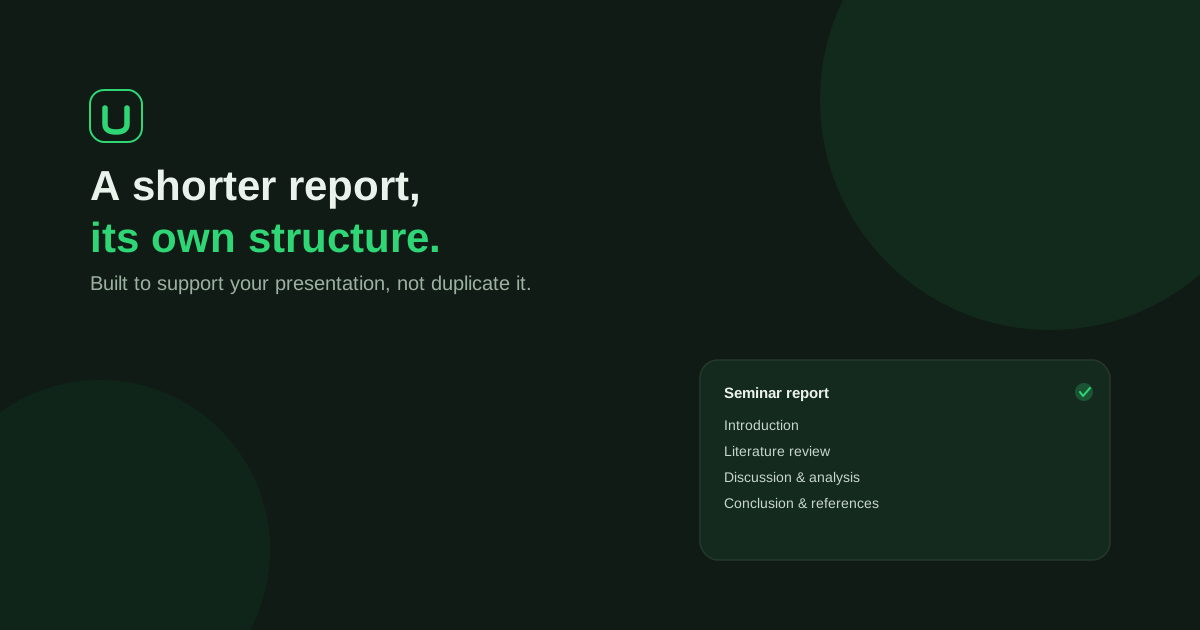
How to Write a Seminar Report Introduction
Write a focused seminar introduction with a paragraph plan, a labelled fictional example and a claim-check worksheet that connects the opening to your sources.
How to Write a Seminar Conclusion With a Worked Example
End a seminar report by answering its central question, connecting the discussion and stating limits, rather than repeating the introduction or inventing results.