Supervisors who read dozens of project reports a year develop a fast instinct for AI-generated writing, and it's rarely about content -- it's about a handful of tells in word choice and rhythm that repeat across otherwise unrelated documents.
The words that give it away
A short list of words shows up constantly in AI-generated academic writing, far more often than in genuine human writing on the same topics:
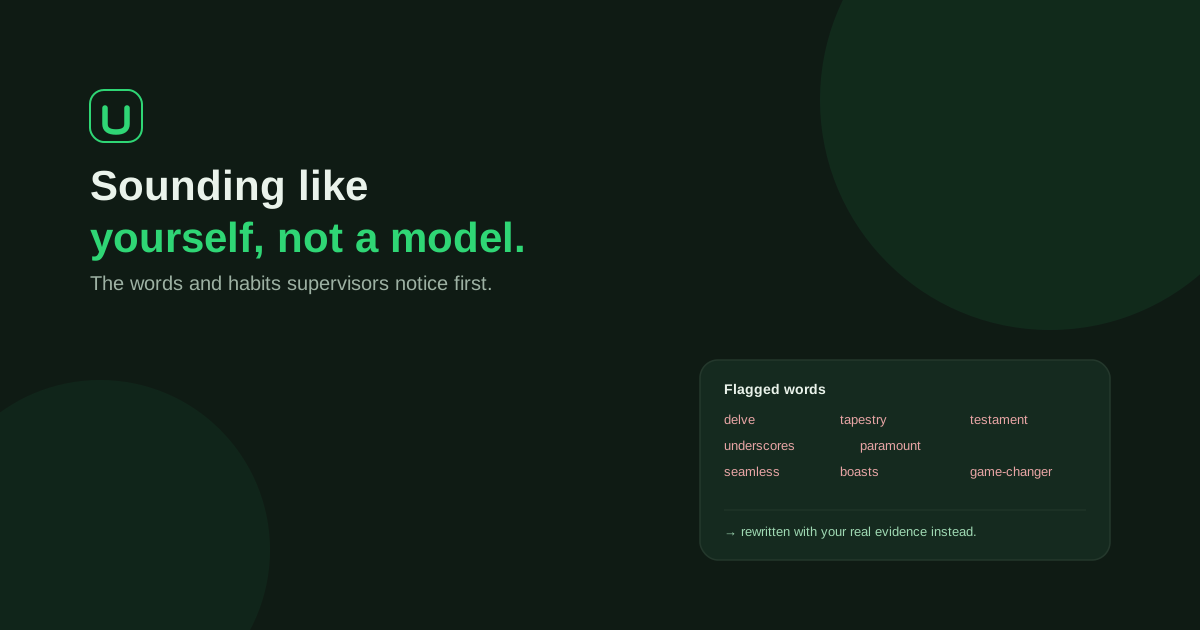
- delve, tapestry, testament, underscores, boasts, paramount, seamless, robust (as a filler adjective), game-changer, multifaceted
- Phrases: "in today's fast-paced world," "it is important to note that," "this study aims to shed light on," "plays a pivotal role"
None of these is disqualifying on its own -- they're real English words. The problem is density: a paragraph using three or four of them in a row reads as generated, not written.
It's not just word choice
Beyond vocabulary, a few structural habits are equally recognizable:
- Uniform paragraph length. Human writing is uneven -- some ideas take two sentences, others take eight. AI-generated text tends toward suspiciously consistent paragraph sizes.
- Overly balanced arguments with no real opinion. "While X has advantages, it also has disadvantages" repeated without ever landing on a specific, defensible claim.
- Findings that are technically correct but oddly generic -- described in a way that could apply to almost any similar study, rather than reflecting the specific data you actually collected.
What to do about it
- Write your findings section from your actual data first, in your own words, before touching any AI tool for phrasing help. The substance should never originate from a model.
- Read every paragraph aloud. If it doesn't sound like something you'd say explaining your project to your supervisor, rewrite it.
- Search your own draft for the flagged words above and swap them for plainer language -- "delve into" becomes "look at" or "examine"; "underscores the importance of" becomes "shows why X matters."
- Vary your sentence rhythm on purpose -- a short, direct sentence after two longer ones reads as considerably more human.
Where UniDraft fits in
Every UniDraft-generated draft is screened for exactly these tells -- the words and phrasing patterns supervisors recognize instantly -- and rewritten using your actual evidence instead of generic filler, before you ever see the page.