A five-chapter project report has more surface area for corrections to interact with each other than a shorter document -- a change in one chapter can quietly break something in another if it isn't tracked carefully.
What gets flagged most often, by chapter
- Chapter 1 (Introduction): an objective that's too broad or doesn't match what the rest of the project actually investigates.
- Chapter 2 (Literature Review): sources summarized without being tied back to the specific gap your project addresses.
- Chapter 3 (Methodology): insufficient detail to be reproducible, or a method that doesn't match what Chapter 4 describes actually happening.
- Chapter 4 (Implementation, Results and Discussion): results, figures, or claims that can't be traced back to real data -- the single most common correction across all document types.
- Chapter 5 (Conclusion): conclusions that go beyond what the results in Chapter 4 actually support.
Handling corrections without losing your reviewed version
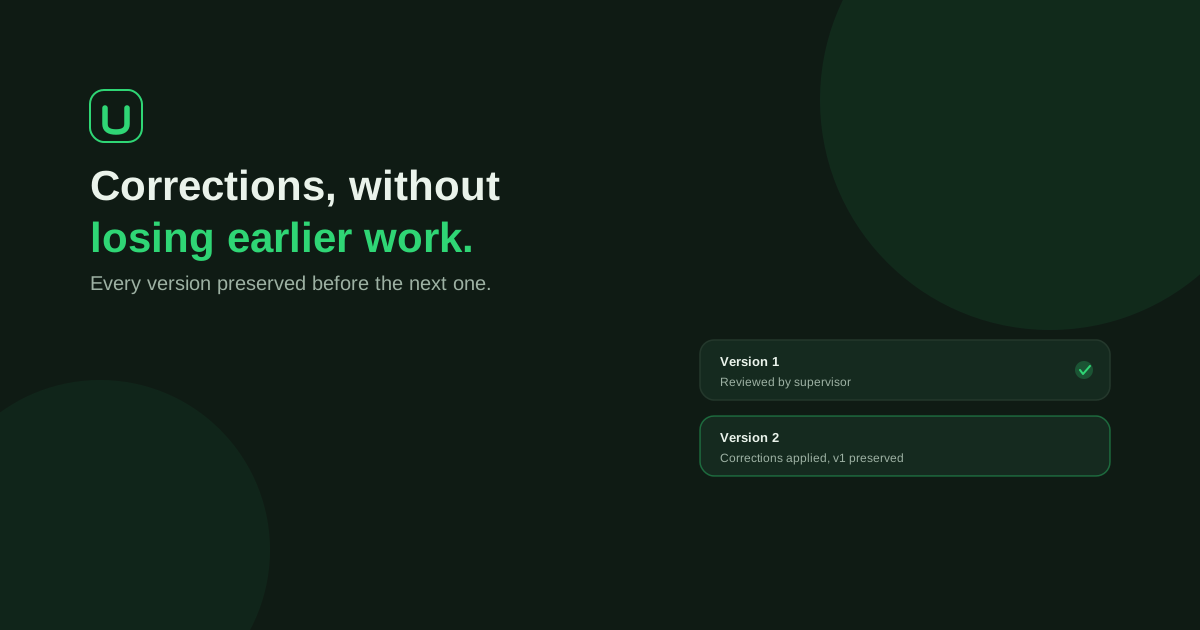
- Keep the version your supervisor already reviewed, untouched, and apply corrections to a copy -- especially important across five chapters, where it's easy to lose track of which version had which fix applied.
- Trace every correction across chapters it might touch. A change to your objective (Ch.1) should be checked against your conclusion (Ch.5); a change to your methodology (Ch.3) should be checked against your results (Ch.4).
- Do a full consistency read-through before resubmitting whenever a correction changes something structural -- objectives, methodology, or a core finding -- rather than only re-reading the specific chapter that was corrected.
- Don't use a correction round to also restructure chapters you weren't asked to touch -- this is how new, unrequested issues get introduced into sections that already passed review.
Where UniDraft fits in
Every UniDraft-generated document is preserved as its own version before a correction is applied, so a supervisor's correction round on one chapter never risks losing the reviewed state of the others -- and every earlier version stays accessible if a change needs to be reverted.