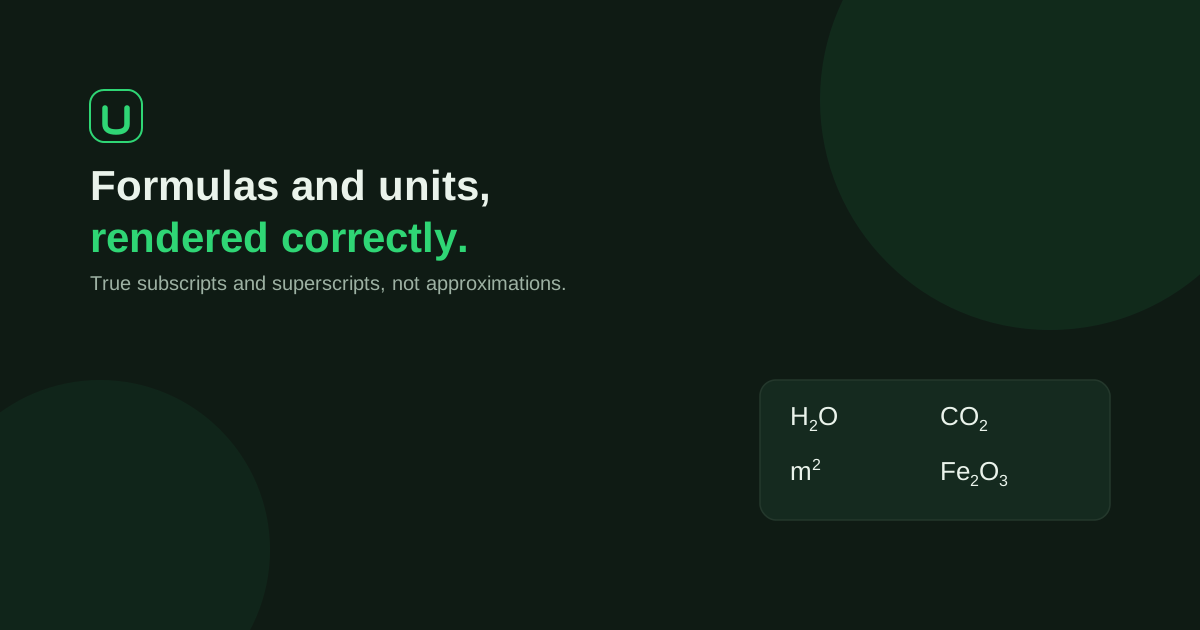
A surprising number of project reports lose marks on something that has nothing to do with the actual chemistry: formulas and units typed as plain text instead of properly formatted subscripts and superscripts.
The core rule
Chemical formulas use subscripts for the number of atoms: H₂O, not H2O. Powers and some units use superscripts: m², not m2. These aren't stylistic preferences -- they're standard scientific notation, and a report that skips them reads as careless even when the underlying content is correct.
How to actually do it in Word
- Subscript: select the character, then
Ctrl+=(Windows) or the subscript button under Font in the Home ribbon. - Superscript: select the character, then
Ctrl+Shift+=(Windows) or the superscript button next to it. - Don't just reduce font size. A smaller-sized "2" placed slightly lower is not a true subscript -- it won't be recognized correctly if the document is later converted, read by assistive technology, or searched.
Common formulas and units to get right
| Written incorrectly | Correct |
|---|---|
| H2O | H₂O |
| CO2 | CO₂ |
| m2 (for area) | m² |
| m3 (for volume) | m³ |
| 25 degC | 25°C |
| Fe2O3 | Fe₂O₃ |
Where this fits into your broader formatting
This is a small detail, but it's part of the same pattern as every other formatting inconsistency: reviewers read a report differently once they notice one type of carelessness, and start looking harder for others. Getting subscripts and superscripts right costs almost no extra time and removes one more reason for a document to look unpolished.
Where UniDraft fits in
UniDraft handles chemical formulas, units, and other scientific notation automatically wherever your content includes them -- rendering true subscripts and superscripts, not approximations, regardless of which discipline your document is for.