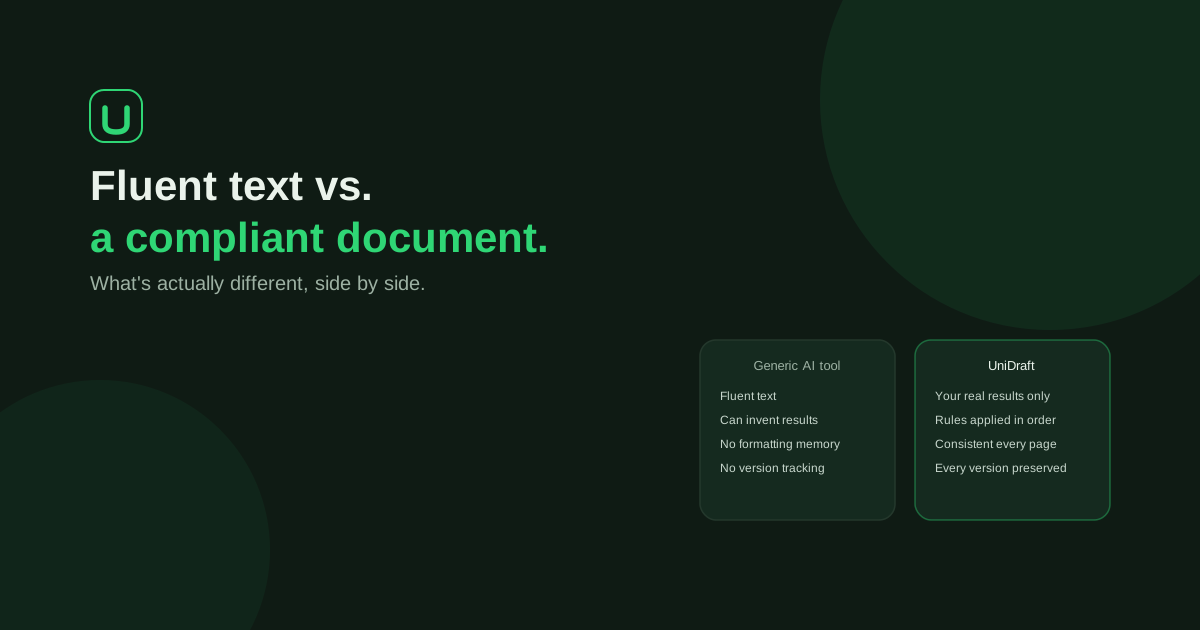
The honest comparison isn't "AI vs no AI" -- it's what a general-purpose tool is built to optimize for versus what an academic document actually needs.
What a generic AI writing tool is built for
Tools like ChatGPT are built to produce fluent, plausible continuations of text based on a prompt. That's genuinely useful for brainstorming, phrasing help, or summarizing a source. It is not built to verify that a stated result matches your actual data, apply your specific department's formatting guideline, or remember what changed between correction round one and round two of a 90-page document.
Where the gap shows up in practice
- Invented results. Ask a generic tool to "write a results section" without giving it your actual data, and it will often produce something plausible-sounding rather than admitting it doesn't have real numbers to work with.
- Formatting drift. A generic tool has no persistent state about your document's established formatting -- each response is generated independently, so consistency across 90 pages relies entirely on you re-specifying and re-checking it.
- No institution-specific rules. It doesn't know your department's guideline unless you paste it in every time, and even then, has no structural way to guarantee every chapter actually follows it.
- No version safety. There's no built-in way to preserve the version your supervisor already reviewed before you start applying their corrections.
What a purpose-built tool does differently
UniDraft is built around a different goal: take your real topic and real results, and assemble a compliant document around them -- never inventing findings, applying your supervisor's, department's, and university's formatting rules in the correct precedence order automatically, and preserving every version before a correction is applied.
The honest tradeoff
A generic AI tool is more flexible and free to use for general writing help. A purpose-built tool trades that flexibility for structural guarantees specific to academic documents -- no invented results, consistent formatting, safe corrections -- that matter more the closer you get to submission.