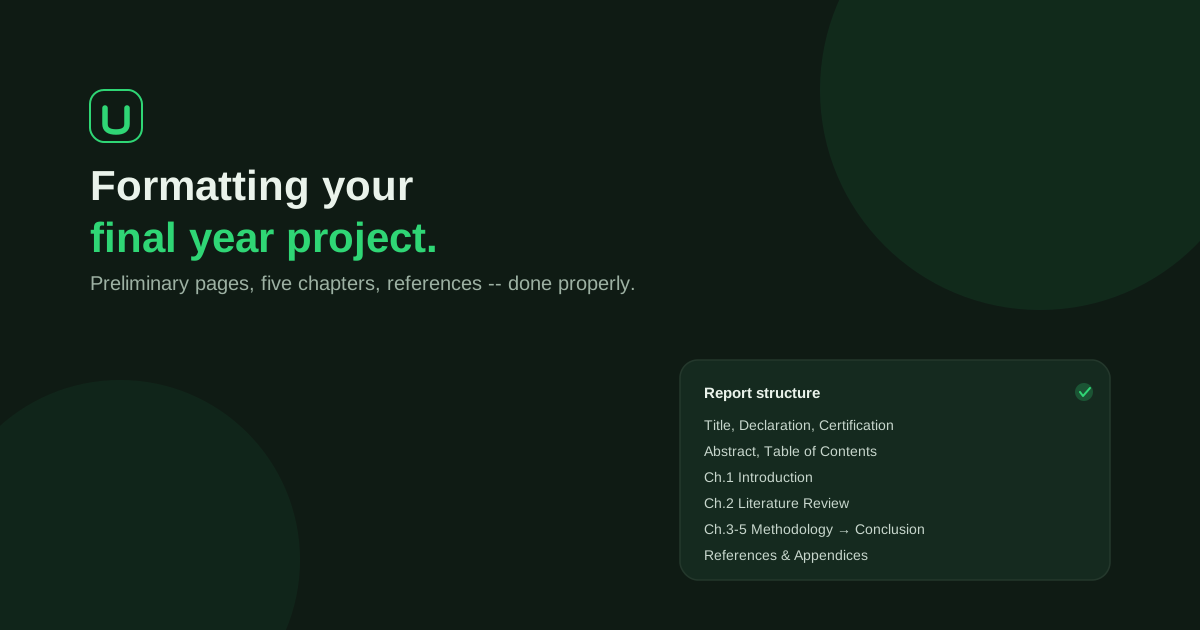
Whether SIWES involves anything you'd call a "defense" depends heavily on your specific institution -- for some, it's just a submitted report; for others, a brief oral review is part of the process.
Does SIWES actually have a defense?
This varies. Some institutions require only a written report, reviewed by your SIWES coordinator with no oral component. Others include a short oral review -- sometimes informal (a conversation with your coordinator about your placement), sometimes closer to a structured defense. Check your specific institution's requirement rather than assuming.
What a SIWES review or defense typically covers, where one exists
- What you actually did during placement -- specific duties, not general categories.
- What you learned, and how it connects to your programme.
- Challenges you faced and how you addressed them.
- Basic questions about your placement company or field, to confirm you genuinely engaged with the work.
How to prepare, if your institution has one
- Know your logbook and report well -- you should be able to describe any week or task without re-reading your own document.
- Be ready to explain your company/placement context -- not memorized facts, but genuine understanding of what the organization does and where you fit in.
- Be honest about challenges -- a coordinator generally responds better to an honest account of a difficulty and how you handled it than a claim that everything went perfectly.
SIWES vs. IT -- same thing?
Largely yes. "SIWES" is the formal scheme name; "IT" (Industrial Training) is the more casual term students commonly use for the same requirement -- you'll hear both used interchangeably.
Where UniDraft fits in
A SIWES report built from your actual logbook and specific placement details -- which is exactly how UniDraft builds it -- is also simply easier to speak to confidently if your institution does include a review, since you're explaining real work you can actually recall and justify.