A SIWES report is judged less on writing quality and more on whether it convincingly shows you were actually at your placement, doing real work. Coordinators read hundreds of these; a report that clearly documents your actual duties usually clears review much faster than one written in vague, generic language.
What SIWES actually is
The Students Industrial Work Experience Scheme places students -- typically in engineering, technology, applied sciences, and related programmes -- into industry for a fixed period (often 4-6 months) between academic sessions. Your SIWES report is the formal writeup submitted afterward, distinct from your final-year project report.
The typical structure
Most SIWES reports follow a structure like this, though your department's guideline always overrides a generic template:
- Preliminary pages -- title page, certification (signed by both your institution and industry-based supervisors), dedication, acknowledgement.
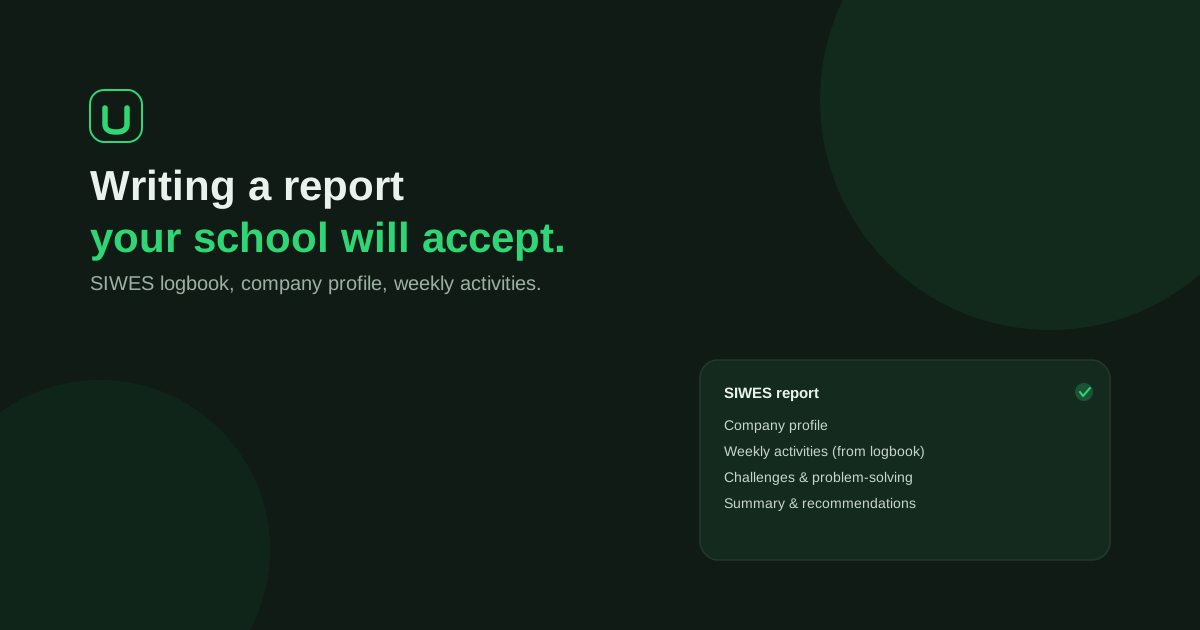
- Chapter 1: Introduction -- background on SIWES itself, your placement company, and the objectives of your training.
- Chapter 2: Company/Organization Profile -- what the company does, its structure, and the specific unit or department you were attached to.
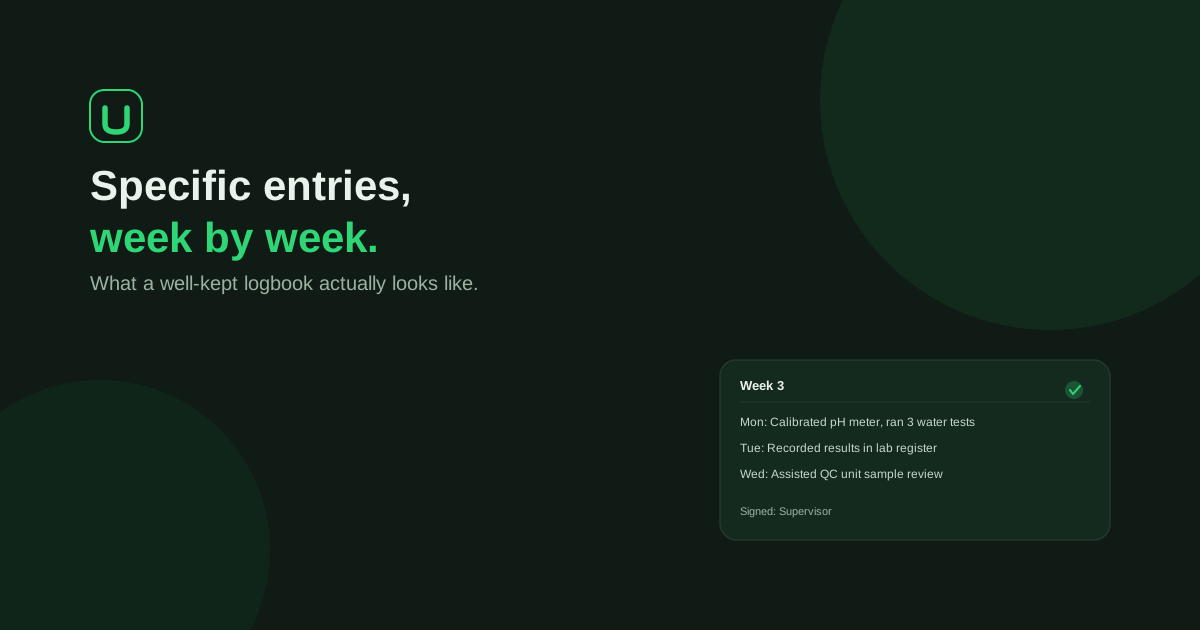
- Chapter 3: Description of Work Done -- the core of the report. Week-by-week or task-by-task description of what you actually did, drawn from your logbook.
- Chapter 4: Challenges and Problem-Solving -- difficulties encountered and how you (or your team) addressed them.
- Chapter 5: Summary, Conclusion and Recommendations -- what you gained, and suggestions for the scheme or the company.
What actually gets a SIWES report sent back
- Vague activity descriptions. "I learned about networking" tells a reviewer nothing. "I configured VLANs on a Cisco switch to segment the accounting department's traffic from the sales floor" shows real, verifiable work.
- A report that doesn't match the logbook. Coordinators often cross-check; inconsistent dates or duties are an immediate red flag.
- Missing supervisor signatures on the certification page -- both your institution-based and industry-based supervisors typically need to sign.
- Generic company profiles copied from the company's own website without any connection to what you personally did there.
Where UniDraft fits in
UniDraft applies this same structure automatically, built around your actual placement details and your department's specific SIWES guideline -- so the company profile, weekly activities, and challenges sections are built from what you genuinely did, not invented or generic filler.