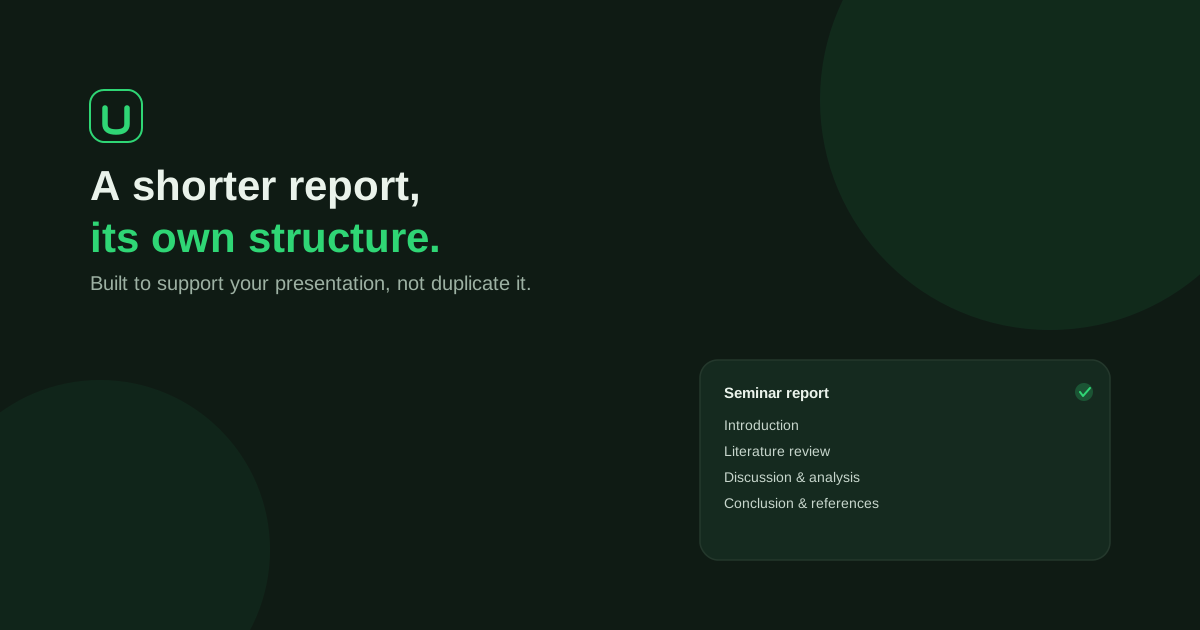
A seminar report is shorter than a final-year project, but not simply a shrunk-down version of one -- it has its own structure, built around presenting and defending a focused topic rather than reporting original research.
Typical structure
- Preliminary pages -- title page, declaration/certification (lighter than a full project's, but still often required), table of contents.
- Introduction -- your topic, why it matters, and the specific question or angle your seminar addresses.
- Literature Review -- the core of most seminar reports. A review of existing work on your topic, organized to build toward your specific angle or gap, not just a list of sources.
- Discussion/Analysis -- your own synthesis and argument, drawing on the literature review to say something specific about your topic.
- Conclusion -- a summary of your argument and its implications.
- References.
Some departments add a light methodology section if your seminar involves any original data or survey work, but many seminar reports skip this entirely in favor of a deeper literature review and discussion.
What makes a seminar report structure work
- The literature review should build an argument, not just summarize. Group sources by theme or finding, not by author, and end sections with a sentence connecting them back to your specific angle.
- The report should support your presentation, not duplicate it. Since seminar reports are typically paired with an oral presentation, write with that audience in mind -- a report that reads as presentation notes with citations added tends to work better than one written as a fully separate academic paper.
- Keep it focused. A seminar report covering too broad a topic reads as shallow; narrowing to one specific angle and going deeper on that usually produces a stronger report.
Where UniDraft fits in
UniDraft applies your department's specific seminar-report structure and formatting automatically, and keeps citations checked against your reference list -- so the structural side is handled, leaving you to focus on the literature review and argument.