Searching for a "seminar report sample" usually means wanting to see what a finished one looks like before starting. The more useful thing to actually copy isn't a specific document -- it's the pattern that separates a strong seminar report from a weak one.
The pattern that matters most: the literature review
This is where seminar reports are won or lost. Compare these two approaches to the same two sources:
Weak (descriptive):
Adeyemi (2023) found that mobile banking adoption in Nigeria increased significantly after 2020. Okafor (2024) studied factors affecting fintech adoption among university students and found trust to be a key factor.
Strong (analytical):
While Adeyemi (2023) documents rising mobile banking adoption nationally, Okafor's (2024) student-focused study suggests this growth is uneven -- trust in fintech platforms, not just access, remains the binding constraint for younger users. This gap between national adoption trends and student-level trust is the specific angle this seminar investigates.
The second version doesn't just report what each source found -- it connects them and states what the connection means for the seminar's own angle.
What else a strong seminar report gets right
- A focused topic, not a broad survey. Narrowing to one specific angle and going deeper produces a stronger report than covering a wide topic shallowly.
- Citations that match the reference list exactly -- no in-text citation without a corresponding entry, and vice versa.
- A report that supports the presentation, not a separate document written in isolation from what you'll actually say.
About "sample PDF" downloads specifically
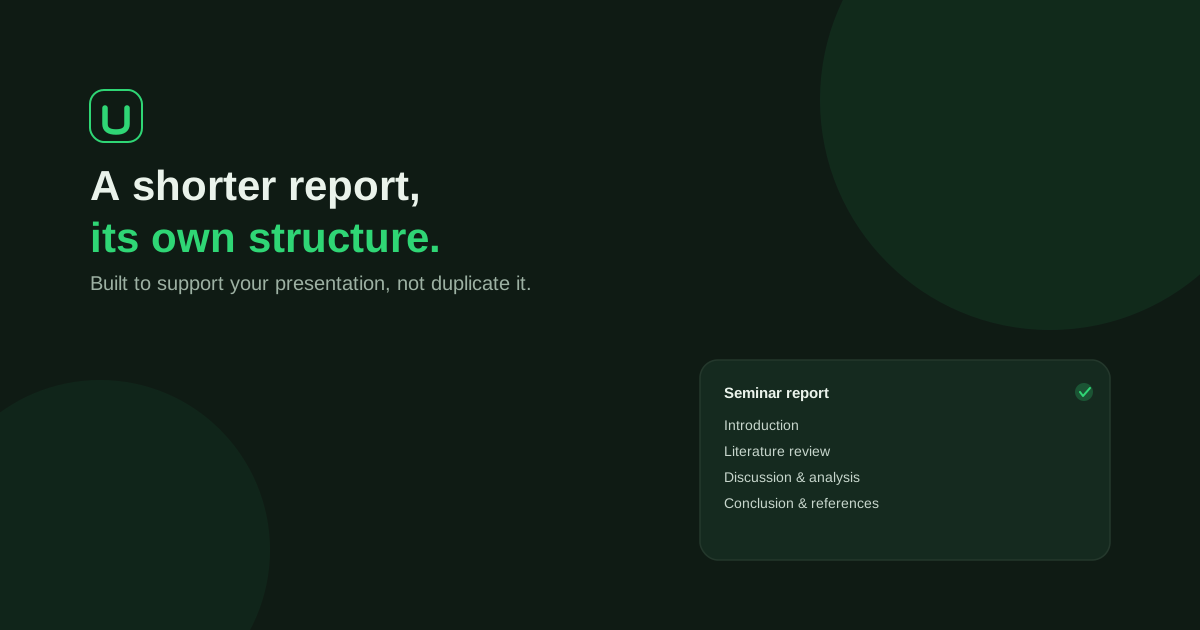
It's tempting to search for a finished sample to model structure from, but samples found online are often outdated, from a different institution's specific format, or risky to lean on too closely. The structure itself (introduction, literature review, discussion, conclusion) is freely describable -- see our seminar report structure guide -- and is a safer foundation than adapting someone else's actual content.
Where UniDraft fits in
UniDraft applies your department's specific seminar-report structure automatically and keeps every citation checked against your reference list, so the format is handled -- leaving you to focus on building the kind of connected, analytical literature review that actually distinguishes a strong report.